
The wild thing
"As soon as I saw you, I knew a grand adventure was about to happen." Winnie the Pooh

She puts her hand on my chest, smiles and says: the answers you seek are already here. My grandmother is hosting a journey ceremony for some of the members of our family this night. Would you like to join us? We are sitting under a tree by the edge of the village. I am looking into the jungle, drinking from a coconut, a saviour in the Amazon wet heat. I had been talking with this new friend about not knowing what the future held and feeling lost in what to do with my next steps. Listening to her, I imagine a night spent around the fire, listening to the jungle noises and to each other as we tell stories and exchange wise advice. I say yes.
The fire is lighting up our faces, sunset has set and the grandmother is busy preparing the cups while we wait in a circle sitting on the ground at the edge of the village. She comes towards me first, as the family guest, hands me a cup, looks into my eyes for a long moment and says: go meet yourself.
I wake up in the jungle eight hours later staring at a huge snake wrapped around the torso of a tree and looking at me at eye level. I am still in that half-asleep, half-dreaming state but I know it is real from the scratches and bruises I can feel on my bare feet and from the heat that makes it difficult to breathe. I see the snake, the intelligence in its eyes as it assesses me, curiosity grabbing me before fear has a chance. Good morning, I say in my mind, my voice not yet back to me. I am Corina. I hope I am not disturbing you. I have no clue how I came here and I will now go back to my people. I hope you have a nice day.
I turn around and start walking back towards the village. One part of my brain registers: this was most likely an adult boa constrictor, anacondas don’t usually go up trees. Another part: it was huge, and it can still suffocate and eat me, wtf am I doing with my back to it and not running. A third: we were well met and running is a sign of disrespect, keep walking. I come to the fire, everyone awake and so I ask the grandmother: why didn’t you come get me? I could have died. She answers: then this would have been your path. I was guarding your spirit, not your flesh.
And this dear reader, was both an encounter with a wild thing and my first ayahuasca experience.
This is a story about wild things. The ones we meet out there and that meet us back, and in the meeting, if we are lucky to survive it, we find more of ourselves. The ones that get formed between us, when we refuse the comfort of a neat category and choose to follow the impulse of our deepest desires. The ones that find us anyway, that we choose despite the steep price, because underneath it all a wild thing is a thing of beauty and aliveness and when it comes into your life with full force and resonance, it illuminates your own beauty and aliveness. It calls you to be more of yourself and that, dear reader, is not just a wild thing. That is a wondrous thing.
Eyes wide open
Eight hours before I woke up at eye level with a boa constrictor, I had spent the night meeting myself. Not the self I present to the world, not the self that was lost and asking questions under a tree in the Amazon heat, but all of it. The ayahuasca journey doesn’t ask you politely, it requires your full self as a condition of passage. You bring all of it or you don’t get through. I got through. And so, I woke up at the base of that tree, all my pieces present, still held together by whatever the night had demanded of me. I hadn’t yet scattered back into ordinary consciousness, into the person who worries and plans and edits herself before speaking. I was just there, whole, barefoot, scratched, sweating and completely present.
So when the snake and I looked at each other, I was fully there to be looked at. And the snake didn’t lunge, it looked. It didn’t retreat but it assessed me with an intelligence that was entirely its own, entirely indifferent to my story, entirely uninterested in being anything other than what it was. And in that assessment, it saw me. Not the fragmentary, worried, lost version that had sat under the tree the evening before. All of me, present and weighted and real. And it found me, not prey, not threat but a being, briefly and completely met by another being. And then I turned around and walked back, not because I had decided anything or understood anything but because the encounter was complete.
In the Slavic tradition there is a figure who lives at the boundary of the living world and the dead world. Baba Yaga. Her hut stands on chicken legs at the edge of the forest, turning its back to the world of the living and its door to the world of the dead. She is not evil, she is not good, she is entirely, uncomplicatedly herself, beyond the categories that organise ordinary life, beyond the social contracts that make human encounters predictable. She eats people or she helps them and what determines which depends entirely on what they bring when they arrive.
Vasilisa arrives because her stepmother sent her into the forest at night to fetch fire. It is meant to kill her but she goes anyway, because she has no choice, and because in her pocket is a small wooden doll her dying mother gave her years before. Feed it, her mother said. Keep it with you, ask it for help when you need it and show it to no one. Baba Yaga sets her three days of impossible tasks, mountains of corn to sort, poppy seeds to separate from dirt, a house to clean, food to cook. Vasilisa feeds the doll at night and the doll does the work while she sleeps and Baba Yaga watches her. She is not fooled, she knows the doll is helping but she doesn’t stop it. She is not testing whether Vasilisa can do the tasks alone but she is watching for something else. On the third day she asks: how do you do it? Vasilisa says: my mother’s blessing helps me. Blessed things have no place in my house, Baba Yaga says, and pushes her out the door giving her a skull with eyes of fire. Go home, this is what you came for.
The doll is not magic in the way we usually mean magic because it doesn’t give Vasilisa power she doesn’t have. It does the work that needs doing so she can rest, so she can stay present, so she doesn’t exhaust herself trying to force the impossible alone. What the mother knew is that her daughter would face conditions designed to break her, and that the only way through was not maximum effort but an interior resource that could act when she couldn’t. The doll is that love made portable. Vasilisa didn’t earn this before she arrived, it was given before she knew she’d need it. But she tended it, fed it, kept it close and showed it to no one. That tending is the preparation, quiet, private, unglamorous. Not a heroic passage but a daily choice to keep something alive in you that the world around you has no category for. Baba Yaga cannot eat Vasilisa because Vasilisa arrives whole. The tasks are not a test of skill but a way of watching, Baba Yaga looking for the thing that makes Vasilisa real. She finds it when Vasilisa names it, my mother’s blessing. Not a strategy, not a performance, not the right answer but the full self, simply named.
And that is what the wild thing cannot be in the presence of without responding. Baba Yaga flinches and gives fire. The snake holds my gaze and lets me walk away. Not because either of them chose mercy but because something real arrived, and the wild thing recognised it.
This is what the encounter gives back. Not an answer, not a transformation, not a story to tell later. The gift is simpler and more permanent than any of those. The snake was not just a snake. In the fullness of that encounter it was beyond prey and predator, beyond the category of dangerous animal that a sensible person runs from. It was itself, completely, its own intelligence, its own unhurried presence, its own way of being in the world that had nothing to do with me and everything to do with what it was. And meeting that, seeing and being seen by something that is so entirely itself that it has no room for pretence, no social contract, no performance of what it is supposed to be, shows you something. It shows you that you are also more than your category. More than a scared, undecided, scratched woman barefoot in the Amazon. More than the role, the doubt, the edited version.
Vasilisa walks into Baba Yaga’s hut as a girl sent to fetch fire and die. She walks out confirmed. Not changed into something else. Confirmed as what she already was, someone with a blessing, with a resource, with a full self that the wild thing found real enough to respond to.
You cannot manufacture that confirmation. You cannot get it from someone who needs something from you, or who loves you, or who is operating inside the same social world you are. It has to come from something that has no stake in your story. Something that sees you from entirely outside your categories and finds you real anyway. That is the gift of the wild thing that it meets you beyond your categories. And in doing so it shows you that you exist beyond them too.
The truth detector
In this company we encourage you to find what you are good at and then shape your role around it. So you can do almost anything as long as you provide value. But nobody holds your hand and teaches you anything, and at the end of the day the clients need to be happy. Can you work with that? I almost couldn’t. I remember a coaching session in my first two months, complaining that I was drowning in uncertainty and had no clue where to put my efforts. She looked at me and said: nobody can answer this for you Corina. What is truly yours to own? What are you the best in the world at? You are a brilliant woman with such a beautiful mind. I am sure you know the answer to that if you stop asking it of others and start asking it of yourself.
And so I did, in the only way I knew how. For the first year I followed my excitement without a clear plan, doing what was offered and what seemed interesting. I wasn’t performing a role because I didn’t yet have one. I was genuinely uncertain, which meant that whatever the people around me were seeing, they were seeing something real. Not the assembled, edited version but the actual thing still finding its shape.
For my first year evaluation I decided to take an ethnographic approach. I asked the systems I was part of, colleagues, manager, clients a question what do you come to me for? what do you find here that you don’t find elsewhere? Thirty conversations.
What came back was this: I come to you when I get a client inquiry I don’t know what to do with, something complex or weird or unknown. I know you’ll figure it out. From my sales colleagues. You are always honest and say the true things even when they are difficult to hear. You are warm, I feel you are part of this company not an external consultant. From my clients. You are so creative, I like that I come to you and always leave with a new idea or a book. From my colleagues. I had asked the people to show me what they saw and they saw me the way the snake saw me, not the category, the actual thing.
Out of that inquiry came the client portfolio I ended up with, the extra projects, the book club, the philosophy group, the experiments with new learning interventions. Each of us who stayed in that company long enough found a version of this, each person, in relationship with their own role, producing their own wild thing. The structure was open, fluid, reliant on constant communication. Confusing sometimes but always alive because something had been allowed to be seen truly, and being seen truly is what the wild thing needs to grow.
Not all wild things between people need institutional permission to survive. Some grow in the margins, in grief, in the inexplicable impulse that nobody can justify and nobody can quite let go of.
What is this? I ask, pointing at the small wooden sign above the door of the gym hall used for somatic therapy. Avenue Johan, the therapist answers. Johan was a colleague, a therapist here for more than thirty years. When he retired we came together to find a departure gift. We cared for him so much, we were so sad he was leaving. This idea came of a wooden sign with his name. We didn’t know what to do with it, it wasn’t quite a gift for him, not quite for us either. We couldn’t understand its utility but we also couldn’t let go of it. So we made it and put it here. She pauses. Every time we pass and see the sign we have a small conversation, a small story about Johan, or just a small warm feeling that adds something to the day.
This wild thing was never inside the official container but it grew in the grief between people who couldn’t name their loss properly and couldn’t let go of it either. It found a crack, a doorframe, a piece of wood, a slightly absurd object with no clear purpose, and lived there. Nobody owns it, nobody manages it. It does its work every day without anyone tending to it consciously. This is the other kind of wild thing between people. Not born from freedom but from love and loss and the refusal to let something real disappear entirely. Harder to kill because it was never where the killing happens.
Before you’re ready
I no longer know the truth of romantic love. I know about marriage, and mature love, but forty-eight has a way of forgetting the heat and passion of seventeen. In the afterword to Wizard and Glass, Stephen King describes sitting in a car in Nebraska, facing the love story he had been avoiding to write for years. Roland’s first love, Susan Delgado. He had started the story in 1970 and was finishing it in 1996 and the gap terrified him. And then a voice answered him. I will help you with that part, said the voice of the boy who had begun the story twenty-six years earlier. Still there, inside him, still seventeen, waiting in Nebraska in 1996 for a middle-aged man to be ready to let him speak. Reading that, my own seventeen-year-old self came forward and I felt that particular ache of knowing you belong to something or someone before you know why, before you have evidence, before the rational mind arrives with its reasonable objections and its knowledge of the cost.
The snake waited until I was whole before it met my gaze. Vasilisa arrived at Baba Yaga’s hut prepared, the doll fed and tended, the blessing carried for years. The company saw me truly only after a year of genuine uncertainty had made me real enough to be seen. Even the wild thing between people in that company required time, freedom, the slow growth of something allowed to find its own shape. All of that suggests a logic of readiness. Bring your full self, tend the conditions, show up whole and the wild thing will find you.
But, dear reader, Joel and Clementine dismantle that logic completely. In Eternal Sunshine of the Spotless Mind they fall in love, damage each other in the ordinary ways people do, and then each, separately, pay a company called Lacuna to have every memory of the other erased. The procedure succeeds. Every memory gone, no residue, no knowledge of each other remaining. And then they meet again on a train to Montauk and the pull is already there before either of them says a word. The wild thing didn’t live in the memories but it lived somewhere prior, somewhere the procedure couldn’t reach.
But the harder thing is what happens next. Before they choose each other again they listen to the recordings, the sessions where they each, separately, catalogued everything wrong with the other. Every grievance, every wound, every reason it failed. They hear themselves at their worst and they hear the other person at their worst. They know exactly how this ends because they have already lived it and lost it and paid to forget it. And they look at each other and say: okay.
Not because they’ve forgotten or because they believe it will go differently. Not because they have done the work or tended the conditions or arrived whole. The wild thing found them on a train before any of that was possible and it didn’t wait for them to be ready and it didn’t ask whether they had earned it. It just arrived and the only question it put to them was whether they still knew how to say yes with full knowledge of the cost.
This is what the snake knew that I didn’t yet understand when I turned and walked back to the village. It didn’t wait for me to be prepared. It found me in the only moment I was truly undefended, barefoot, scratched, all my pieces present before the editing self had reassembled. I didn’t tend those conditions, the night had stripped them away without asking my permission.
The boy in King’s car kept the heat of seventeen intact across twenty-six years not because King tended him but because the wild thing is more durable than we think. It waits in Nebraska, it survives erasure, it grows above doorframes nobody manages, it finds you on trains before you have done a single thing to deserve being found.
And this is the argument I want to make underneath all of it, the thing the snake and Vasilisa and the thirty conversations and Johan’s sign and Joel and Clementine are all pointing toward together: the wild thing does not require your readiness. It requires your honesty. The snake didn’t need me prepared, it needed me present. Baba Yaga didn’t need Vasilisa skilled, she needed her true. The company didn’t need me to have a plan, it needed me to ask a real question and receive a real answer. Joel and Clementine don’t need to be healed, they need to say okay and mean it.
You can tend the conditions. You can feed the doll and keep it close and show it to no one. You can spend a year in genuine uncertainty and let the field see what is actually there. All of that is real and worth doing and it matters.
But some wild things don’t wait for any of it. Some wild things find you on a train to Montauk, before you’ve done any preparation at all. Before you’re ready, they just arrive. And the only question is whether you still know how to say yes.
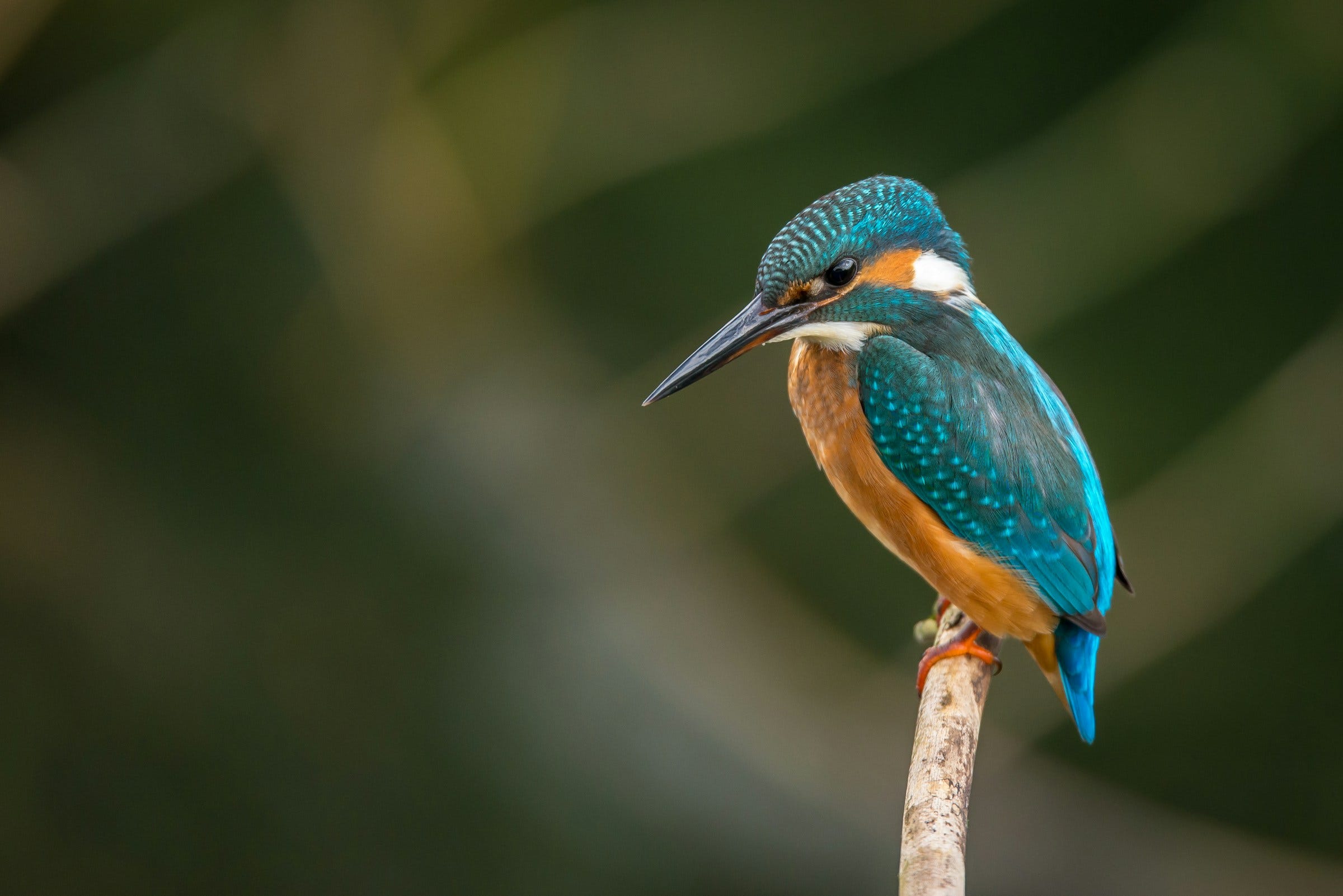
Photo by Vincent van Zalinge on Unsplash